Uncategorized

  • Who doesn’t love a sauna?

    Saunas travel well

    I love saunas. I can remember when I first discovered the wood-fired version on a Swedish archipelago. The health-giving properties are obvious. It transforms your skin. You feel great – especially after the cold plunge. 

    But to the Anglo mind, it has always been an exotic, foreign kind of experience. For some reason, the sauna idea didn’t travel with the Vikings. That’s surprising, since it’s an idea that clearly spread far. 

    Everyone loves a sauna

    Of course, as soon as I’d discovered the Swedish sauna, I discovered it wasn’t the preserve of the Swedes. In fact, sauna isn’t even a Swedish word. It’s Finnish. Swedes call them bastu

    Russians have their banya. The Turks have their hammam. And then there are the amazing historical discoveries…

    I’m reading the Personal Memoirs of Ulysses S. Grant. (Why, you ask? That’s another story). In them, he relates his time in the Pacific North-West in 1852, when he rubbed shoulders with local native tribes. 

    This is what he has to say about a strange practice they used for curing illness:

    Something like a bake-oven was built, large enough to admit a man lying down. Bushes were stuck in the ground in two rows, about six feet long and some two or three feet apart; other bushes connected the rows at one end. The tops of the bushes were drawn together to interlace, and confined in that position; the whole was then plastered over with wet clay until every opening was filled. Just inside the open end of the oven the floor was scooped out so as to make a hole that would hold a bucket or two of water. These ovens were always built on the banks of a stream, a big spring, or pool of water. When a patient required a bath, a fire was built near the oven and a pile of stones put upon it. The cavity at the front was then filled with water. When the stones were sufficiently heated, the patient would draw himself into the oven; a blanket would be thrown over the open end, and hot stones put into the water until the patient could stand it no longer. He was then withdrawn from his steam bath and doused into the cold stream near by. 

    Just one more thing that came across the Bering Strait to the Americas long before the European discovery. 

    While we’re talking saunas, fancy a cold plunge? Read about The Baltic Cure For Fear


  • I’m Gay Therefore I Am… Creative

    Open window in an outside wall of a house
    Let’s go outside (Photo by Katerina Pavlyuchkova)

    Face it. Being gay makes you more creative*. The straight world just doesn’t always like to admit it. 

    On BBC Radio 4’s In Our Time, an academic said how the family of Spanish writer Federico Garcia Lorca was silent on the subject of his sexuality until well into the 80s, after the fall of the fascist dictatorship. 

    Even then, his Sonnets of Dark Love were still published with a cover depicting a woman’s body – as if encouraging the reader to imagine they were written to a woman. His homosexuality was buried. 

    I am Generation Metrosexual 

    I imitate gay culture. I love the sense of style and beauty that pervades it. I ♥ gay (or bisexual or pansexual or, do we need a label?) artists from George Michael to Oscar Wilde, Christine and the Queens to Robert Byron. 

    It’s what makes those moments of social suppression so strange. Lorca’s family hushing up his sexuality. George Michael being made into a safe mum’s heartthrob for most of his career… 

    We are all indebted to gay cultural icons. But more than that, straight society needs to lighten up. The more rigidly defined by stereotypes it is, the less anyone can express themselves authentically. 

    Does homosexuality make you innately creative? 

    I’m being flippant. But hey, look how the ‘gay minority’ punches above its weight every day across the arts. So if it’s not just that being gay gives you a supercharged creativity gene, then what is it?

    Is it something about being on the social periphery? Being an outsider? Seeing the fluidity beneath the surface more clearly? Seeing a world outside the box? 

    I think that helps. 

    *Disclaimer: Yes, I know. You can be gay and totally uncreative. It’s a hook to make you read. 

    While we’re talking about the power of identity, spare a thought for Being Middle Class Man


  • Is it news?

    Read all about it (Photo by Juliana Malta)

    When is something newsworthy? The definition has broadened as the media has. Once upon a time, newsreaders would announce that ‘there is no news today’. Imagine. Unthinkable. 

    Two stories this week made me wonder. They were both small tragedies: the deaths of two people in mundane circumstances – one doing their job, another walking down a street. 

    Do I need to know?

    The knee-jerk reaction to the idea that these deaths might be irrelevant to me is to call me callous. How can you not care? Are you so numb to the world that you can’t empathise with another’s pain? No. 

    I can empathise. I can fully inhabit the horror of what those close to these tragedies must feel in their own selves. If I turn my mind to it, these stories can cause me pain. Compassion is alive. But what is the function of these stories?

    News to make you care

    Is news there just to help us to care? Is that why we read it, in order to improve our empathy? I’m not absolutely sure. I suspect there is a compulsive quality to being informed of all the tragedy in the world. 

    Some tragedies no doubt have wider relevance. Terrorism reveals political and social conflict. Major accidents might reveal organizational chaos. Huge natural phenomena are significant beyond the destruction they cause. 

    But much of our news is now filled by stories of everyday tragedy. It tells of people suffering terrible losses that are, nonetheless, common ones. Tragedy strikes every day, somewhere on Earth. 

    All adults understand this 

    We have the capacity to know and accept that the world is full of good events and bad ones. Is it really necessary to pore over every single bad one that occurs? 

    Talking of new media we don’t need, Are You A Smartphone Addict?


  • A dad in the playground

    Empty playground equipment
    Play by the rules (Photo by Ward Mercer)

    I spent the recent Father’s Day in a pub garden playing with my kid. A girl came up to me and enthusiastically tried to get me to join in her game. She grabbed hold of my hand and tried to lead me off round the playground. 

    Paedo paranoia alert

    I flinched. I pulled my hand away. I tried to stand at a nonchalant distance from her. Why? Fear that the parent might look up from their smartphone and see a strange man ‘interfering with my child’. 

    Two depressing realisations:

    • The reason this child was so eager for my attention was that I was the only adult showing any interest in playing with a kid. Whoever was their parent was too busy with their smartphone. 
    • Though I would have been quite happy to play with the child, my fear of engaging with someone else’s child sent the clear message to this kid that I didn’t want to play, just like every other adult. 

    Saudi-style isolationism

    It’s a strange social phenomenon when we can’t be bothered to play with our kids (we’d rather look at anything, anything on our phones), but at the same time don’t want anyone else outside their age bracket to play with them. 

    The result is bizarre playgrounds like the one I found myself in, where children play with each other. Then occasionally a dad (it’s usually a dad, making up for his absence throughout the week) appears in the ring and they all want to engage him. But he will be careful to only play with his own child, and no one else’s. 

    Children have entered a realm akin to women in Saudi Arabia, able to interact only with members of their own family. For their own protection, you understand. Ironic, since I’m sure the experts are always telling us most abusers are family members. 

    What I should have done

    Hindsight is bliss. Afterwards, someone suggested what I should have done. That is, ask the child who their parent was, introduce myself, and ask them if perhaps they’d like to pop the smartphone away and come play, too! 

    While we’re on the subject of what males should do, apparently Boys Don’t Like Flowers


  • What is Hong Kong?

    Hong Kong Island skyline with Kowloon in the background
    A city or a state? (Photo by Ryan McManimie)

    Hong Kong was returned to China by Britain in 1997. Now it’s Chinese. Looking from the UK, that’s pretty much how things appear. It’s only as you get closer that you find it’s not so simple as that. 

    Sort of sovereign

    In light of the current protests against extraditing Hong Kongers to Mainland China, I was reminded of my surprise – on crossing the land border – at the extent to which Hong Kong still feels like a separate state.

    I first visited Hong Kong in the 2000s. At the time, I regarded it as my first visit to China. After all, it’s officially Chinese territory. On top of that, it’s quite clearly a Chinese city in ethnic and cultural terms. 

    When I took the boat to Kowloon, I was even surer I was in China. The district felt a little less Western, a little less British than Hong Kong Island. What’s more, Kowloon is on the mainland – in purely geographical terms. 

    Where does the mainland start?

    I made my second visit to Hong Kong in January 2019. That time, I crossed the border between Hong Kong and what everyone calls ‘The Mainland’. I visited the Chinese city of Shenzhen – and this was no EU-style border. 

    The majority of Hong Kong’s land is actually a peninsula of the mainland, not islands. Along its 30km land border with ‘The Mainland’, there are several border crossings. 

    Whereas borders between sovereign states within the European Union can be crossed without even realizing it, you know all about moving from Hong Kong into Mainland China. 

    Passports and visas please!

    You must pass Hong Kong border guards. Then you’re driven across no man’s land. Finally, you must pass Chinese border guards. All that can come as a shock to someone who thought it was all one country. 

    And officially it is. One country, two systems, and all that. Just don’t forget your passport. 

    Read more about my visit to Shenzhen in my blog: When Baldrick met a QR Code in China


  • Love your opposite

    Consolations of the Forest book by Sylvain Tesson
    What we think about when we think about love

    Watching people in airports is a great pastime. During a session in Copenhagen this week, I noted, not for the first time, how sibling-like many couples are. 

    They say opposites attract, but it’s amazing how often we choose a mirror image of ourselves. We choose self-love, in effect. 

    My polar opposite on Earth

    Which made me wonder whether it wasn’t a very well adjusted, secure person who is able to find the capacity to love one entirely different from them. That would be love. 

    The thought then chimed with something I read in the novel I took with me on my flight: Consolations of the Forest: Alone in a Cabin in the Middle Taiga by Sylvain Tesson – a wonderful mix of raw backwoods simplicity and highfalutin intellectualism. 

    Here’s what he had to say after a few months alone by Lake Baikal:

    Wouldn’t real love be the love of what is irremediably different from us? 

    Loving a Papuan, a child or one’s neighbour is hardly a challenge. But a sea sponge! 

    Considering how quick we are to love the comfortable and the familiar, it’s a good exercise to put yourself in the headspace of loving that which is weird and unfamiliar. 

    Love thy stranger

    On the human level, this is a case not so much of Love Thy Neighbour as Love The Person You’ve Never Seen Before In Your Life. Feel love for someone truly from another place, climate, race, culture, age. 

    Beyond the human, as Tesson himself goes on to suggest, it’s about getting as uncomfortably far away from mammals as possible. Dogs, cats, rabbits, bears – they’re easy to love. Ants, reptiles, sharks, spiders? 

    Then comes the real test

    What Tesson doesn’t extend it to, but which is perhaps still pertinent, is the love for anything, however repellent. Could you feel tenderness for carrion? Could you love a cancerous cell? Ultimately, could you as a living thing feel love for death and decay?

    One way to feel what an animal feels is to move like an animal. Find out more in my blog Ever Wanted To Be A Bear?


  • If we go local do we end up divided?

    To drop in or drop out? (Photo by Karim MANJRA)

    If we all go local, will the walls go up? It’s a paradox I mused on this week when I visited Hay Festival to see the incredible Spell Songs – a musical reimagining of Robert MacFarlane and Jackie Morris’ The Lost Words – a book that’s spawning its own eco-activist movement. 

    Extinction rebellion!

    Everything right now happens in the shadow of Greta Thunberg – the Swedish teen who is bringing the adults of the world to attention about the crisis of climate change. So, too, Hay Festival. Her presence was everywhere in talks on every environmental subject of importance. 

    No more air miles

    Greta has famously given up on air travel. She visits European leaders by train from Stockholm. Her stance is common. I know many who have limited or abstained from planes, cars and anything that has been brought a long way to reach them. 

    There’s a balancing act here. If we go local enough for long enough, will we simply develop silos? Stop flying. Go offline. Eat food grown within thirty miles of your doorstep. All cool. But limiting. 

    If we all followed through on this for long enough, would we simply reinvent the pre-industrial age? Would foreigners become like fairytale beasts? Would the diversity of the world start to evaporate from our minds? 

    I am an internationalist

    For those who prize internationalism over nativism, climate change offers a tightrope. You wanna do all the right things, but you wanna keep waving to the others over there. You wanna stay connected.

    It’s a sweet irony that climate change offers a rather neat excuse for nativists and protectionists the world over, and yet they are generally ideologically inclined towards denial. 

    The right spells

    What I saw from Spell Songs at Hay Festival was eco activism. It was from-the-gut passion for the natural order of which we are a tiny part. It was a slow-down, do-less mantra. But it was offered by musicians celebrating the coming together of music and culture from around the world. 

    Are you local, or are you global? I am both.  

    When I showed my son The Lost Words, he began making up new ones. Discover some of them in my blog


  • Are you a smartphone addict?

    The perfect smartphone burial pit

    Our household is having the zeitgeist conversation of the moment: how to manage smartphone addiction. 

    Then I got a lesson as if sent from heaven. My phone simply went missing. Was it a sign? Turns out it was, in a way. 

    iPhone found in pit

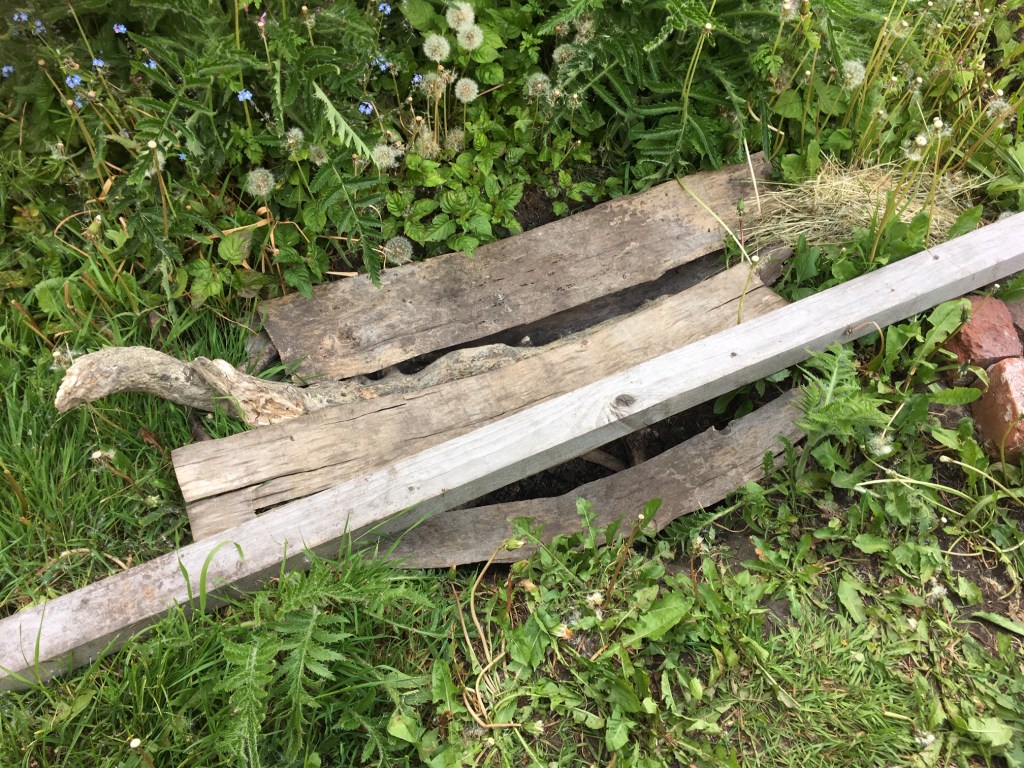
    I don’t know why I even looked, but as I took away the carefully constructed pile of planks and sticks that cover my son’s excavation hole in the garden, under the final layer I struck treasure – the back of my iPhone case nestled in the soil. 

    The frenzied search had lasted some time. I pieced together my movements like a detective at a crime scene. Finally I remembered. I had been standing in the garden while my son was playing…

    …browsing the BBC News app. Was it more important to know about the Australian elections than what my own son was doing in our back garden? Apparently. 

    His response had been to take it when my back was turned and bury it. 

    Smartphone containment

    No one seriously entertains the idea that mere mortals can ‘do an Ed Sheeran’ and simply get rid of it. We don’t have an army of Personal Assistants, armed with their own smartphones, to manage our lives for us. 

    But for all the necessity, most of our smartphone use is utterly luxurious – none of it has to happen, probably not for as long as it does, and we all know the apps are designed to keep us thumbing and scrolling. 

    You’re all caught up!

    Yes, I know. Apps like Instagram have fallen on their sword and started to tell us when we’ve literally seen every image in our feed once already and can probably switch it off. But it sure feels good to know it’s all done. I’m up to date!

    The next challenge for tech is to see if it can find a place in actually freeing us to live our lives alongside it. TV always had trouble with that – but TV couldn’t move with us, which limited its power. 

    Our pocket rockets have to find a long-term way of making us feel better. If they ultimately get in the way of real life, they’ll just be switched off.

    Or buried.

    Turns out kids can even teach us about words (shouldn’t that be the other way around?). Read my blog Lost and Found Words


  • Long hair spells danger

    Why do we cut boys’ hair? Because girls have long hair and boys have short hair, that’s why. But why do we do it? That human hair grows is natural. It just happens. So why the scissors? Is baldness to blame? 

    As Canned Heat observed in 1968:

    The police in Denver, they don’t want none of them long hairs hangin’ around

    Some things don’t change much 

    I had a haircut today. You may have noticed I often like to wear my hair long. It goes right back to my teens, when I realised that the act of not cutting, but growing male hair was one of the most rebellious inactions available. 

    Grow your hair

    It was free. It was easy (it just happened). It was passive, which was useful if you were a pretty shy, retiring kind of kid. It was a way of yelling loudly at authority without actually yelling loudly at authority. 

    Now, I just like the look. My son is a mini me, so is often mistaken for a girl (My stubble gives me away). But it regularly reminds me how we culturally link hair length to gender by pruning our children accordingly. 

    Grrrrrrrrrr

    It wasn’t always so. Look at Samson and his strength. Jesus Christ and all his disciples, wafting their locks. 17th century gentlemen and Indian braves. But somehow, ever since we began delousing soldiers with short back’n’sides, that’s been it for men. 

    Rather like the Western suit and tie, it’s gone global. When I do return to hairdressers, it’s with a hint of trepidation. I await the: I only do one kind of men’s cut, and that’s all coming off, son! 

    But of course, that’s only in my head. Right? Here’s to hirsute variety. After all, remember kids: 

    All hairdressers are in the employment of the government. Hairs are your aerials. They pick up signals from the cosmos and transmit them directly into your brain. This is the reason bald-headed men are uptight.

    Danny in Withnail & I

    While we’re on the subject of what boys should like, Boys Don’t Like Flowers


  • Imagine your vote counted

    Person voting at a ballot box
    They all count (Photo by Element5 Digital)

    I voted last week. Local elections. Just local people with local issues. Nothing exciting for the outside world. But something unexpected and previously unknown happened… The candidate I voted for won. 

    Guess what, my vote counts

    My candidate didn’t just win – she won by a landslide. In that moment, it dawned on me. All my life, I had walked into polling stations with reverence. I knew how lucky I was to be able to vote. But I never actually thought my vote counted. 

    I have always voted in rural England, a place where politics barely exists. I realised in that moment that to vote in rural England is a bit like voting in Egypt. Yes, you can have a vote. Choose whomever you like. It makes no difference. 

    The Tory will always win

    Because the Tory will always win, I realised that even at the age of 40, I still hold that slightly disgruntled, apathetically accepting peasant’s attitude that someone else will always serve.

    I can get all the education I like. I can be as well-informed about the world as possible. But I will never enact decisions. The Tories do that for me. Them, and occasionally Labour. I’m merely a passenger. 

    What will you do with your power? 

    When the candidate I chose – The Green Party’s Diana Toynbee – won with 531 votes, taking 52.9% of the vote, I had a new sensation. I felt like the Muslim Brotherhood in post-revolution Egypt. Wow. We won? Now what do we do? 

    The act of responsibility, of actually being given the opportunity to make decisions, is a heady one, even by the proxy of representative democracy. When it happened, I realised how much potential is wasted when people like me spend most of their lives assuming they are voiceless. 

    Democracy is a great idea

    I could paraphrase Gandhi here. In England, democracy would be a great idea. If we could move on from the notion that the Tories simply run things – outside a few urban Labour areas – we might stop grumbling about them. 

    More importantly, we might learn the lesson the Muslim Brothers briefly learnt in Egypt. That running things is hard. Much harder than living in eternal, angry, impotent opposition to power. 

    Talking of votes, fancy another one on Brexit?